When a gas furnace will not ignite, starts and shuts off, or runs without producing warm air, the problem may involve its ignition system, burner assembly, flame sensor, gas controls, or another operating component. Replacing parts without identifying the actual fault can leave the original problem unresolved.
At Miami Air Conditioning Repair, we provide gas furnace repair for homeowners who need an existing gas-fired heating system inspected and repaired. We assess the furnace's operation, identify the component or condition affecting its performance, and explain the repair options based on what the inspection reveals. For properties with heat pumps, electric air handlers, or general heating faults, we also provide comprehensive heating system repair in Miami. If your furnace is clicking without igniting, shutting down shortly after startup, or making an unusual noise when the heat comes on, contact our team to arrange a gas furnace inspection in Miami, FL.
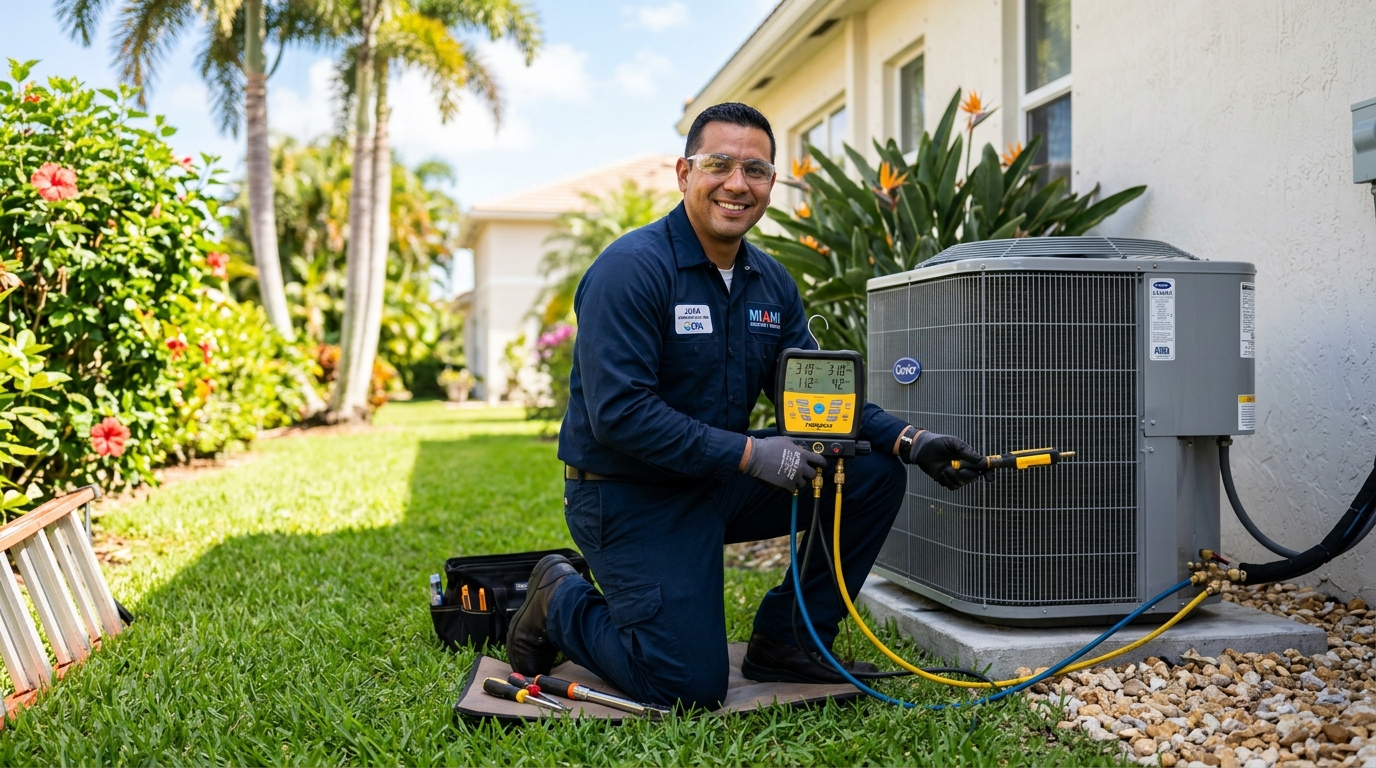
A gas furnace relies on several components working in the correct sequence. The thermostat calls for heat, the ignition system starts the burner, the flame is established and detected, and the blower circulates heated air through the home. A fault at any stage can interrupt heating.
Our gas furnace repair service focuses on diagnosing problems with existing gas-fired equipment, including:
Cracked silicon carbide or silicon nitride hot-surface ignitors and intermittent spark modules.
Oxidized flame sensor rods, burner tube corrosion, and improper microamp flame rectification signals.
Faulty solenoid coils, gas pressure regulator malfunctions, and 24V control signal dropouts.
Draft inducer motor failures, blocked pressure ports, cracked sensing tubing, and open draft switches.
Direct-drive PSC or ECM blower motors, run capacitors, high-limit temperature sensor trips.
Integrated furnace control (IFC) boards, flame rollout switches, auxiliary limit cutoffs, and wiring.
Combustion chamber inspection, flue pipe drafting analysis, and carbon monoxide prevention checks.
The repair required depends on the furnace model, its condition, and the fault identified. We focus on the actual cause rather than assuming that every furnace shutdown needs the same replacement part.
Having trouble with your gas furnace? Contact Miami Air Conditioning Repair to discuss the symptoms and arrange service.
Schedule Diagnostic Assessment →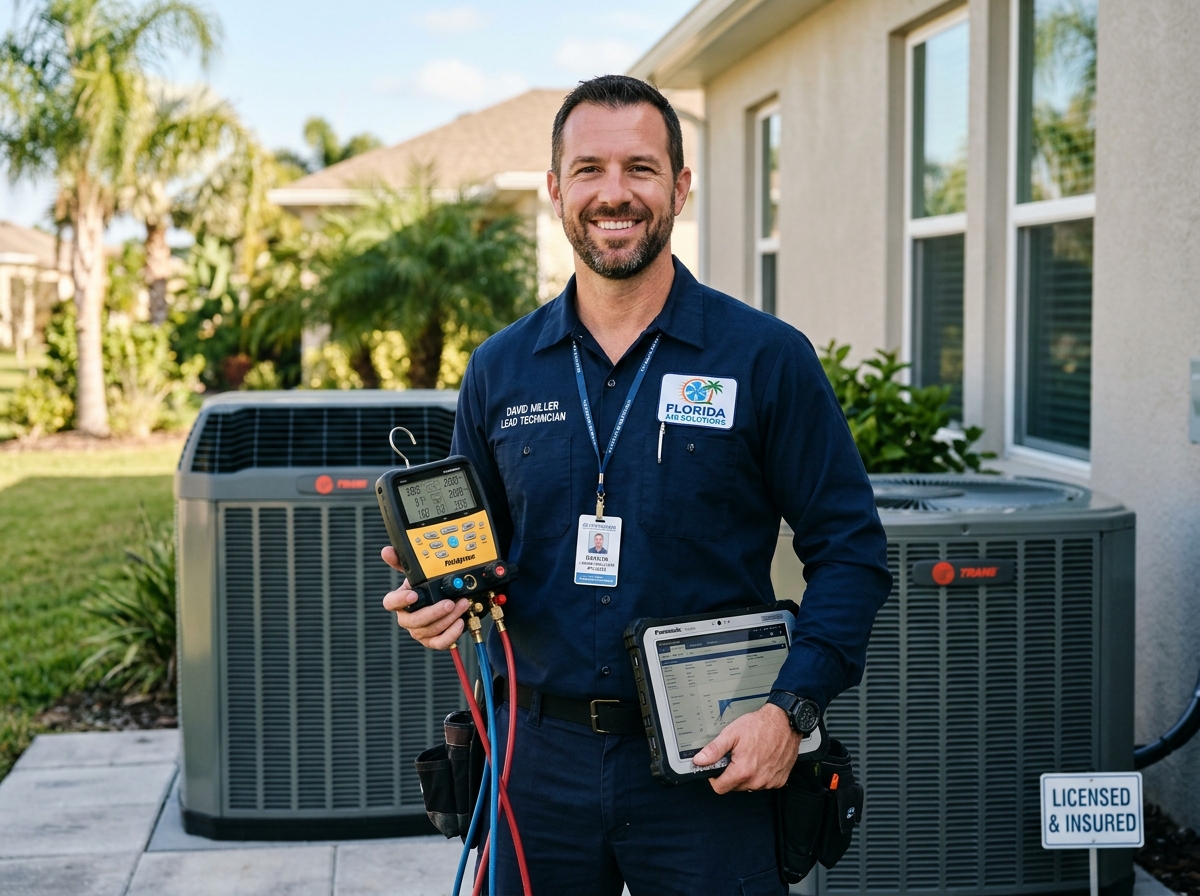
Choosing an HVAC company means trusting someone with your property's comfort and expensive equipment. With 25 years of combined experience across South Florida, we prioritize professional care, accurate diagnostics, and dependable workmanship.
With 25 years of heating diagnostic experience, our technicians service gas furnace burners, flame sensors, ignitors, and gas valves safely and efficiently.
Licensed and insured, we prioritize safety by testing for carbon monoxide leaks, inspecting heat exchangers for cracks, and verifying flue draft.
Our technicians diagnose ignition lockouts, faulty pressure switches, and blower motor failures using precision digital diagnostic instruments.
We explain furnace safety findings clearly and deliver upfront estimates before proceeding with any burner or valve repair work.
A gas furnace can show several warning signs before it stops heating altogether. The important part is understanding where its operating sequence is being interrupted and whether the problem involves ignition, gas delivery, flame detection, airflow, or a safety control.
Key furnace stages inspected:
If you smell natural gas, hear loud ignition bangs, or your carbon monoxide alarm sounds, leave immediately and call 911 or your gas utility from outside.
View Safety Protocols →A gas furnace repair should begin with understanding how the equipment is operating and where its sequence is being interrupted. The inspection is directed by symptoms, furnace design, and findings rather than a one-size-fits-all parts checklist.
We assess whether the furnace receives the call for heat, checking the 24V control transformer, door interlock switch, circuit breakers, and IFC board power.
The ignitor and associated controls are checked when the furnace fails to light, including hot surface ignitor resistance (ohms) and spark ignition modules.
We assess burner operation, carryover alignment, and whether the flame-sensing system is correctly confirming flame rectification signals back to the main control board.
Where indicated, gas-control operation, manifold pressure, and relevant electrical signals are assessed by certified technicians to verify proper fuel delivery without leaks.
These components are verified when the furnace cannot establish draft before ignition, testing inducer amperage, fan wheel integrity, and pressure switch continuity.
If the furnace runs without warming the home or repeatedly shuts down, blower capacitor strength, motor windings, fan wheel cleanliness, and filter restrictions are checked.
Where symptoms or inspection indicate a concern, relevant combustion and venting components are assessed for condition, cracks, corrosion, and safe flue gas discharge away from the property.
A gas furnace combines fuel, electrical controls, ignition, and combustion. Some warning signs require immediate safety action rather than a routine repair appointment.
Leave the building immediately and take everyone with you. Do not operate lights, switches, appliances, or phones inside. From a safe location outside, call 911 or your gas utility. Do not re-enter until emergency responders or the utility confirm it is safe.
Leave the property immediately and get fresh air. Call 911 from outside and do not return until the property has been assessed and declared safe. Carbon monoxide cannot be identified by smell; functioning detectors are essential.
Stop using the furnace and arrange a qualified inspection immediately. Repeated ignition noises can indicate delayed gas combustion that risks cracking the heat exchanger or causing fire hazards.
If you notice burning plastic smells, charred casing, or separated flue vent pipes, shut down electrical power to the furnace at the switch or breaker and arrange a certified inspection.
Not every furnace problem means the entire system needs to be replaced. A faulty ignitor, flame sensor, electrical connection, or individual component may be repairable when the rest of the furnace is in suitable condition.
Replacement deserves consideration when the equipment has extensive deterioration, recurring failures, unavailable parts, or a serious safety-related defect. We evaluate the entire system based on:
Gas furnaces typically last 15–20 years. Older equipment approaching this milestone with multiple worn components is often more economical to replace.
If the heat exchanger is cracked, rusted through, or venting is compromised, replacement is virtually always recommended due to carbon monoxide hazards.
If you have needed multiple service visits over the past two heating seasons, the system's reliability is failing and replacement may be the smarter investment.
Discontinued furnace models may require obsolete or hard-to-source parts, resulting in extended downtime and elevated repair expenses.
If a repair costs close to 50% of a modern high-efficiency furnace, replacement offers superior warranty protection and significant monthly energy savings.
We assess whether fixing one part (e.g., an inducer motor) will leave a failing blower motor or corroded burner assembly waiting to break down next.
For homeowners whose existing furnace is no longer a practical repair candidate, our furnace replacement service can help with the next step.
Discuss Repair vs. Replacement →Gas furnace repair costs depend on the fault, the furnace model, the components involved, and the amount of work required. An ignitor replacement, a control-board problem, and a burner or venting issue are different jobs and should not be treated as if they have one standard price.
The cause of the problem affects the diagnostic work and repair requirements. A furnace that fails during ignition may need a different inspection and repair from one that overheats or shuts down after running.
If a component has failed, the correct replacement must be compatible with the furnace. OEM electronic ignitors, specialized pressure switches, and model-specific control boards influence the estimate.
The location of the furnace (attic closet, crawlspace, or dedicated mechanical room) and accessibility of affected components influence labor time and safety procedures.
If the furnace has multiple problems or a serious heat exchanger concern, consider whether a high-efficiency furnace replacement in Miami is more economical than repeated repairs. For property additions or new construction, we also engineer new furnace installations.
Contact Miami Air Conditioning Repair to discuss the furnace symptoms and arrange an assessment for a repair estimate.
Request Written Estimate →A gas furnace should not be repaired by guessing which component has failed. Ignition, gas controls, burner operation, and safety systems need to be considered together when a furnace is not operating correctly.
Our business brings 25 years of HVAC experience to residential heating and cooling service. That experience is valuable when diagnosing a system that starts intermittently, shuts down during operation, or shows more than one symptom.
Our certified technicians assess the equipment and the problem reported by the homeowner. The aim is to identify the fault and explain the repair required, rather than recommend a part replacement based on a symptom alone.
Miami Air Conditioning Repair operates as a fully licensed and insured HVAC contractor (Florida Lic ). Homeowners can discuss their heating concerns with an established service provider with complete peace of mind.
A furnace with a failed ignitor is not the same as one with a compromised heat exchanger or multiple deteriorating components. We believe the repair decision should reflect the actual condition of the equipment and the work required.
You should understand what the inspection has found and what the proposed repair involves. We explain the issue and available options upfront so you can make an informed decision about your furnace.
Explore genuine recent gas furnace diagnostics, ignitor replacements, and safety overhauls completed across Miami-Dade, Broward, and Palm Beach Counties.
 Miami, FL
Furnace clicked and hummed but failed to ignite the burners. Testing revealed an open circuit on the silicon nitride ignitor with 1,200 ohms resistance.
 Coral Gables, FL
Furnace shut off after 30 seconds with a 3-flash error code. Identified a failing inducer motor drawing excess amperage and insufficient negative draft pressure.
 Fort Lauderdale, FL
Gas valve failed to open despite receiving 24VAC control signal from the board. Solenoid internal coil was seized due to moisture intrusion.
Our radio-dispatched mobile repair vehicles serve residential properties throughout Miami-Dade, Broward, and Palm Beach Counties.
Complete residential and light commercial gas furnace inspection and diagnostic services across Greater Miami.
Expert diagnostic testing, ignitor overhauls, and combustion safety checks throughout Broward County.
Scheduled diagnostic appointments and safety evaluations for furnaces throughout Palm Beach communities.
Enter your 5-digit South Florida ZIP code to verify immediate mobile diagnostic truck dispatch.
Read genuine feedback from South Florida property owners about our diagnostic accuracy, professional communication, and dependable workmanship.
"This is my first house with a gas furnace, so I wasn't sure what to expect when it started making unusual noises. I didn't want to ignore a potential safety issue. Having someone inspect it and explain the problem was reassuring."
"Furnace stopped producing consistent heat during a cold morning. Called Miami Air Conditioning Repair, explained what was happening, and arranged a service visit. The problem was diagnosed and the repair was taken care of."
Clear technical answers to the most common questions regarding residential gas furnace ignition, flame sensing, repair costs, and combustion safety.
Our certified furnace combustion technicians and dispatch coordinators are ready to explain your options and provide honest guidance.
(305) 555-HEATA furnace may light and then shut down if the flame-sensing system does not confirm that the burner flame is established. A faulty flame sensor is one possibility, but ignition, burner, gas-control, and safety-related faults can produce similar symptoms. The operating sequence needs to be checked to identify the cause.
Possible causes include a thermostat or electrical issue, faulty ignitor, pressure-switch problem, inducer motor fault, gas valve issue, or control-board problem. The correct diagnosis depends on where the startup sequence stops.
Yes. The flame sensor helps confirm that the burner has ignited. If the control system does not receive the expected signal, it may shut off the gas supply as a safety response. The sensor and related burner operation should be checked before deciding on cleaning or replacement.
The blower may continue circulating air even when the burners are not operating. An ignition failure, interrupted heating cycle, control issue, or another component fault may be responsible. The furnace needs to be inspected to distinguish a heat-generation problem from a blower problem.
A loud bang may indicate delayed ignition, where gas ignites later than intended. Burner or ignition problems can contribute to this condition. Stop using a furnace that repeatedly makes loud ignition noises and arrange a professional inspection.
A compromised heat exchanger can create a serious combustion-safety concern, allowing deadly carbon monoxide gas to enter indoor living spaces. The equipment should be assessed by a qualified technician, and it should not continue operating if it is suspected to be unsafe. If a CO alarm sounds or exposure is suspected, leave the property and call 911.
The cost depends on the furnace model, the fault, required components, and the work involved. An inspection is needed to identify the problem and provide an appropriate repair estimate. We provide upfront pricing before any work begins.
That depends on the furnace's overall condition, repair history, parts availability, and the cost of the required work. A single repairable component does not automatically mean the furnace needs replacement. If a compromised heat exchanger or multiple recurring problems make continuing repairs impractical, we explain the options for a high-efficiency furnace replacement in Miami, an engineered new furnace installation, or a modern heat pump heating system.
Whether you need emergency heating diagnostics, seasonal tune-ups, new equipment sizing, or complete system replacements, explore our specialized heating solutions:
Fast troubleshooting for unresponsive electric heat strips, thermostat control wiring, high-limit safety trips, and blower motors across all system types.
Certified diagnostics for hot surface igniters, flame sensors, draft inducer assemblies, gas pressure regulators, and cracked heat exchangers.
ACCA Manual J heating load calculations, gas piping, venting runs, and custom plenum transitions engineered for new home builds and room additions.
Replacing aging, short-cycling, or red-tagged heating units with high-efficiency variable-speed equipment matched to your existing central AC.
Troubleshooting 4-way reversing valves stuck in cooling, frozen outdoor coils, defrost sensors, and dual-mode thermostat heat staging.
Specialized service for pellet feed auger motors, electrical cartridge igniters, pressure vacuum switches, and exhaust combustion blowers.
If your gas furnace is not igniting, keeps shutting down, or is failing to heat your home, the next step is to identify what is causing the problem. Miami Air Conditioning Repair provides residential HVAC service backed by 25 years of experience, certified technicians, and licensed-and-insured business credentials.
Fill out the form below. We will confirm your appointment within 15 minutes.